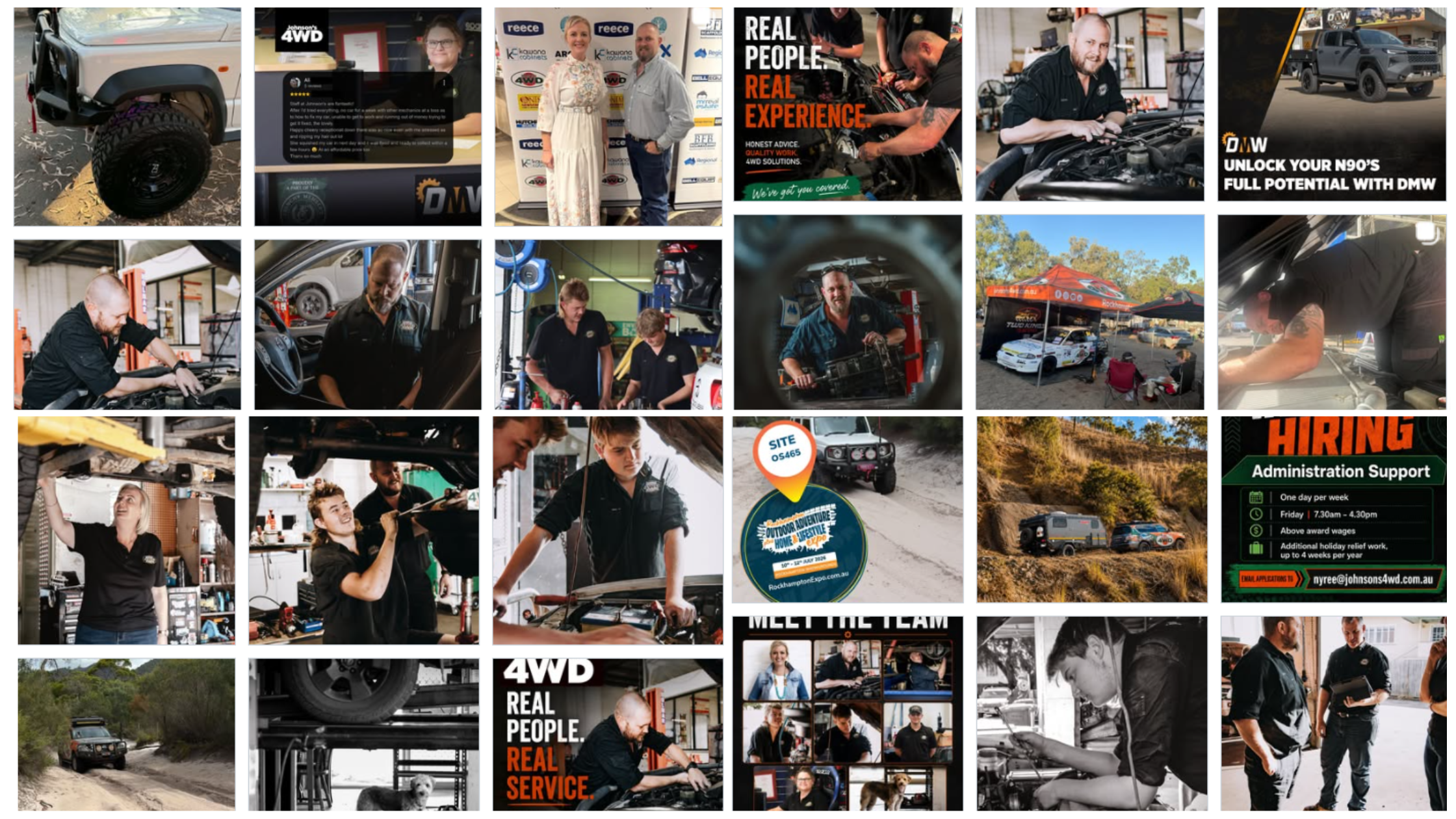
It's Sunday night. The page hasn't had a post in a week, so you grab a photo from the bay, write a line under it and hit post. Job done.
Except it isn't, because posting was never the job.
When a workshop's social media isn't bringing in bookings, it's usually because the posts don't have a purpose. Each one goes up to fill a gap, not to move a customer one step closer to picking up the phone. Content that moves people is planned around one question: what does a customer need to know before they're ready to book with you?
Key takeaways
- Posting isn't the goal. Moving a customer one step closer to booking is.
- Swap "what should I post today?" for "what does a customer need to know before they book?"
- Every post needs a job: introduce, answer, show or reassure.
- Planned content builds confidence, and confidence is what gets the phone to ring.
Why does good content still turn into noise?
Because most workshops plan what to post, not why they're posting it.
A decent job photo. A tip about tyre pressures. A shout-out for the long weekend. None of it is bad. But with no purpose behind it, it's a collection of unrelated posts, and a collection doesn't take anyone anywhere.
Without intention, even good content becomes noise. The customer scrolls past, and nothing about the post gave them a reason to stop.
What should you ask instead of "what should I post today?"
Ask this: what does a customer need to know before they're ready to book with me?
Write the answers down. Who's going to work on my car? Do you work on vehicles like mine? Will you explain what's wrong, or just hand me a bill? How long will I be without it? Can I trust you?
That list is your content plan. Every answer is a post. Most of them are questions you already answer at the counter every week.
What jobs can a workshop's posts do?
Every post should have one job. There are four that matter.
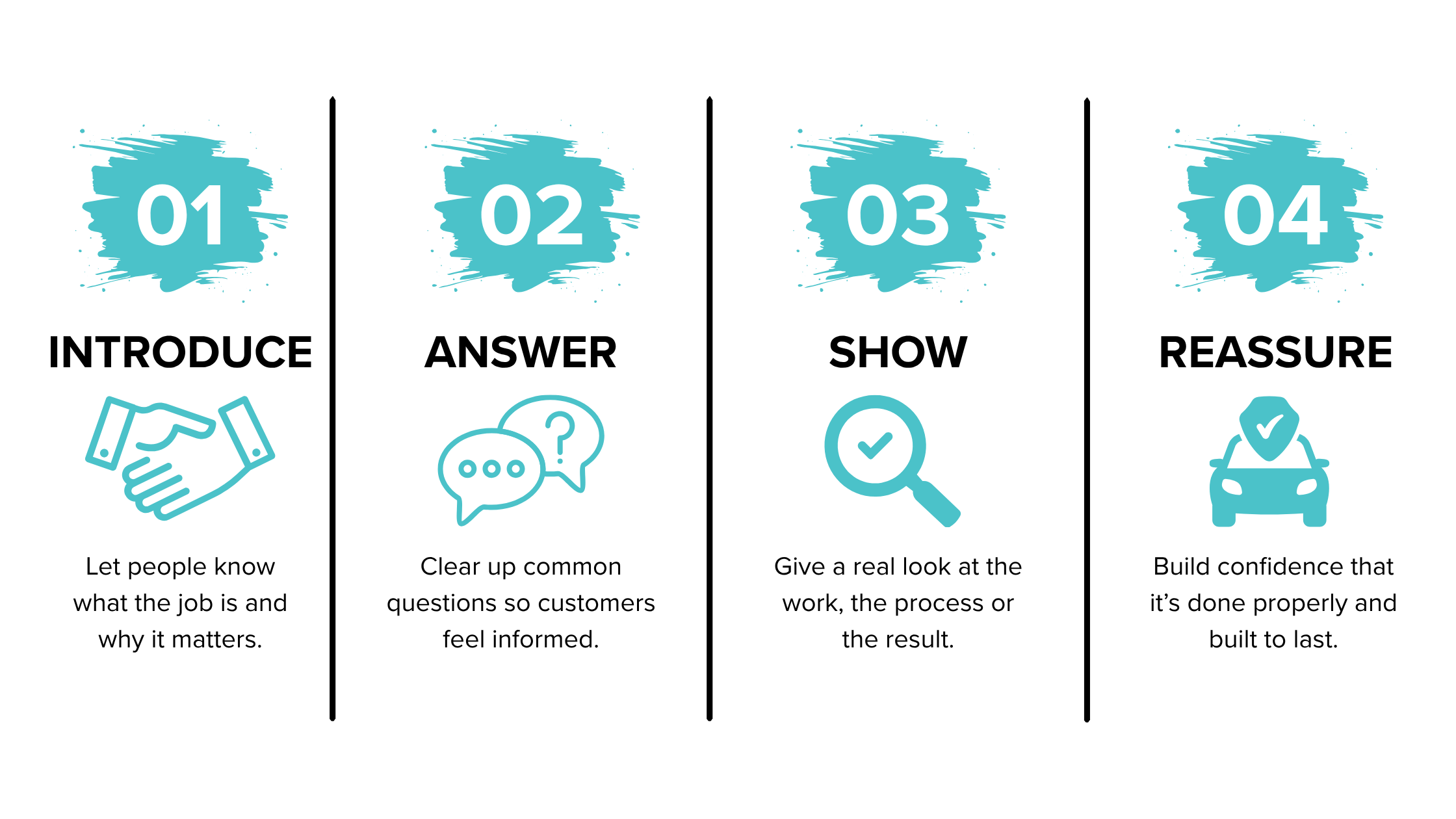
Introduce
Who you are, who's in the bay, what you specialise in. This is for the customer who's never heard of you.
Answer
The questions customers ask before they book. How long, why it costs that, whether it can wait.
Show
Your expertise, in the work itself. The tricky fault tracked down. The before and after. The job done properly. More on that in How do you show customers your workshop is worth paying for?
Reassure
Take the uncertainty out. What happens at drop-off, how quotes work, what you do if you find something extra. More on that in Why clarity is the foundation of sustainable marketing.
Each post does one job. Together they make a path, and that's where bookings come from.
How does planned content turn into bookings?
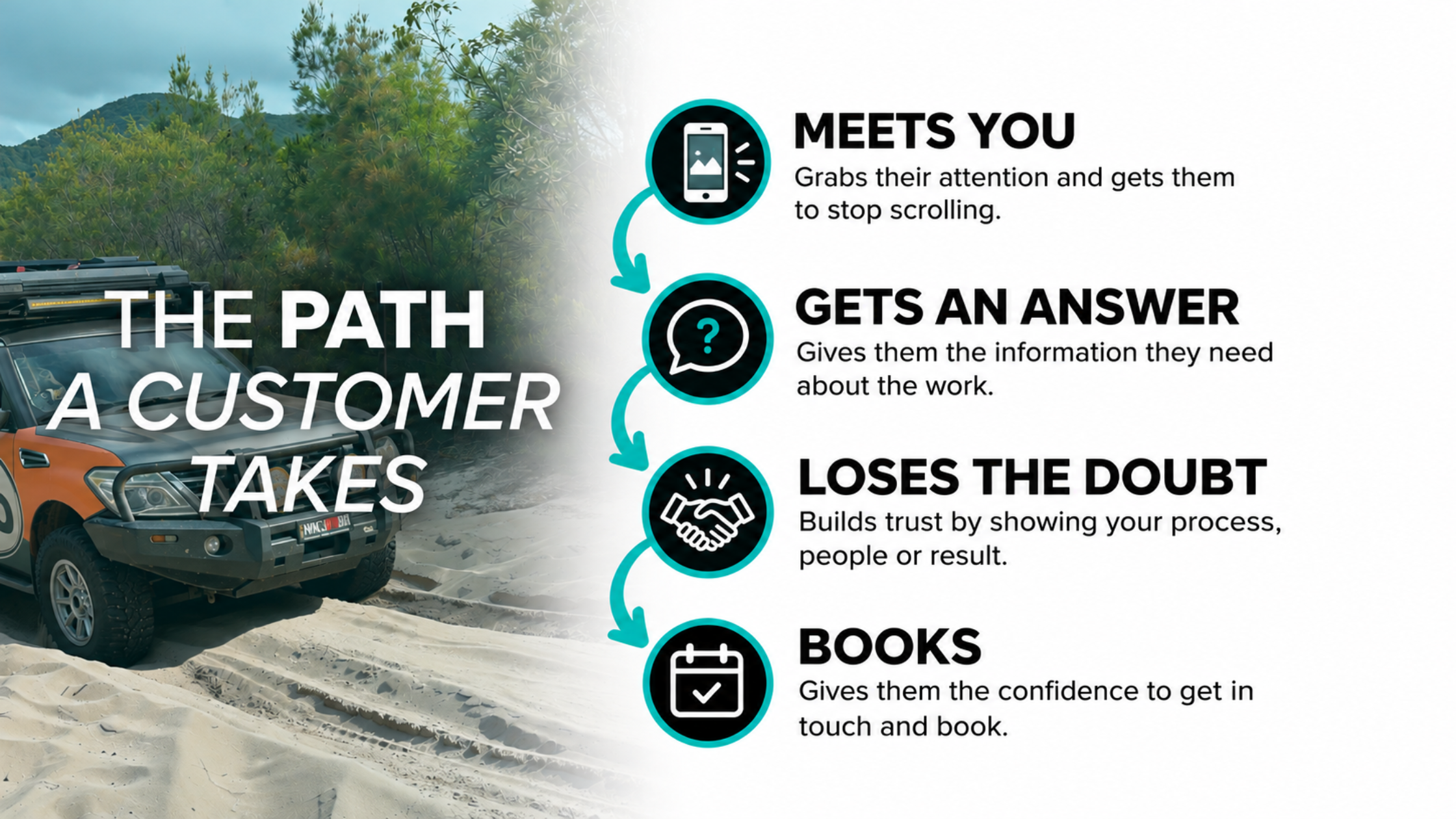
When content is planned with purpose, it stops being a pile of posts and starts being a path. A customer meets you, gets a question answered, sees the work, loses the doubt, and books.
They don't just scroll past your content. They gain a bit more confidence every time they see it. And confidence is what makes someone pick up the phone.
It also stops the content drifting. Each job can carry the one message your workshop wants to be known for, from a different angle. That's covered in Should your workshop keep saying the same thing in its marketing?
A quick check for your workshop
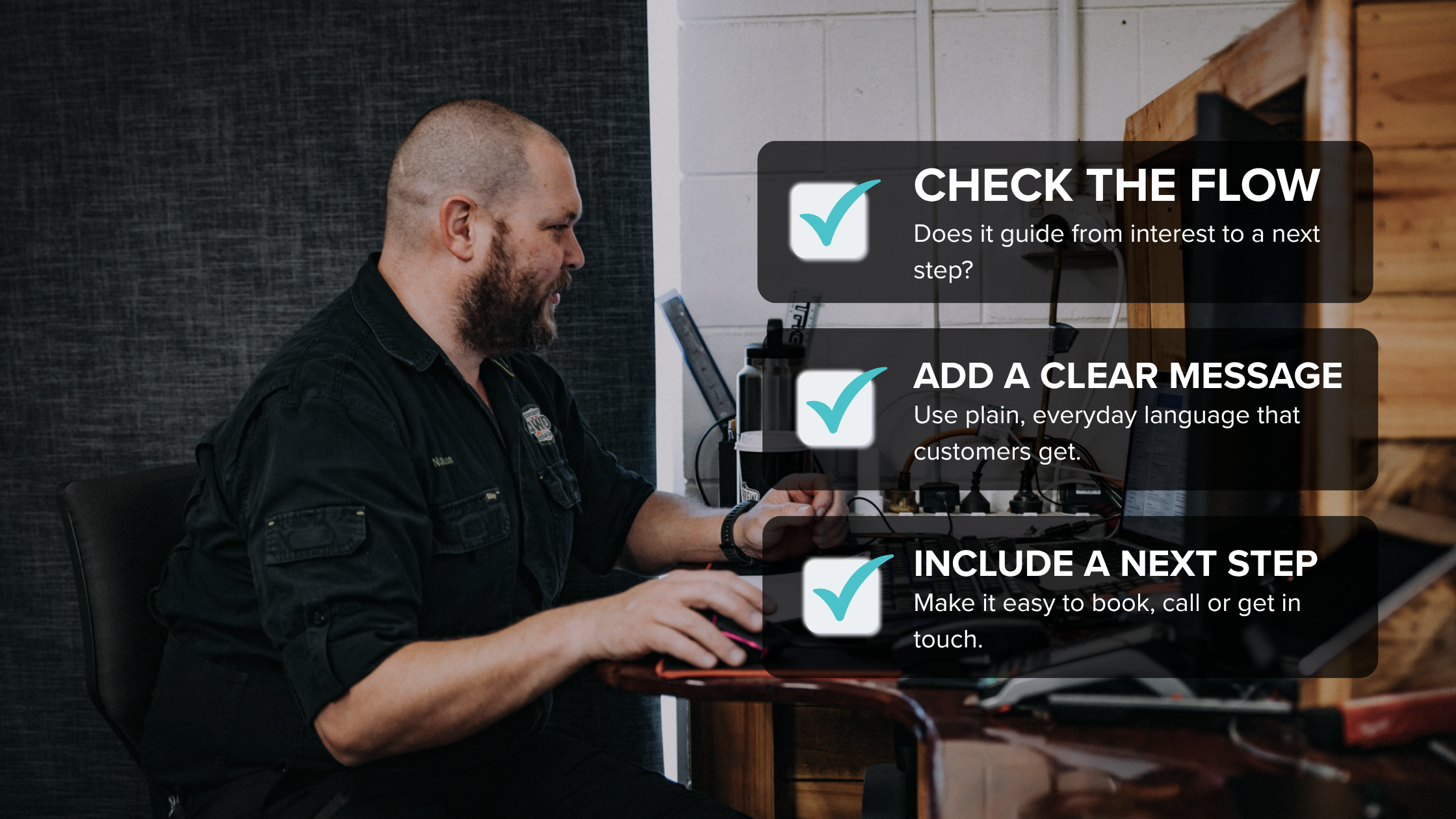
Ask yourself:
- Does each post have a clear job?
- What customer question is this post answering?
- What do I want a customer to think, feel or do after seeing it?
- Is my content bringing in the work I actually want more of?
Take your last ten posts and write the job of each in one line. If you can't name one, that post was filling a gap.
Who plans the content when the workshop is flat out?
This is where most workshop content falls over. Not the ideas. The planning. It's hard to think about what a customer needs to know next when the bays are full and the phone won't stop.
Marketing Unagency Co. plans it once, properly. A content plan mapped to your seasons, your local events and the way your workshop runs, with every piece given a job and connected to your website, email and ads. Then it goes out on a rhythm, whether the week is quiet or flat out.
If you'd like to see what that looks like for your workshop, the conversation is there when you're ready.
Content should do more than fill your social media calendar. It should move your customers closer to booking.
Frequently asked questions
Why isn't my workshop's social media getting bookings?
Usually because the posts don't have a purpose. They go up to fill a gap rather than to move a customer closer to booking. Plan content around what a customer needs to know before they book, give every post one clear job, and the posts start working together instead of standing alone.
How do I plan social media content for my workshop?
List the questions a customer has before they book: who'll do the work, do you handle vehicles like theirs, how long, how much, can they trust you. Turn each answer into a post. Then spread them across four jobs, introducing, answering, showing and reassuring, so every week moves customers a step forward.
What makes a good post for a mechanical workshop?
One clear job and one question answered. A good post either introduces the workshop, answers something customers ask, shows the work, or takes away a doubt about booking. If you can't say in one line what a post is for, it's probably filling a gap rather than bringing in work.
Does every workshop post need a call to action?
No. The ask should match the post's job. A post introducing your team or answering a question can simply land the idea. Save the direct ask, like booking in, for posts whose job is to prompt it. Asking for the booking in every post wears thin quickly.