
The customer rang three workshops this morning. You were the second. They went with the cheapest, and you'll never know if they'd have come to you for a better reason.
The tempting answer is to get louder. More posts. Bigger claims. "Best workshop in town."
It doesn't work. Volume isn't what makes a customer pick you. Value is, and value gets shown, not shouted. Show customers clearly what they get from your workshop and the right ones stop needing convincing.
Key takeaways
- Posting more and claiming more won't make your workshop stand out. Being clearer will.
- Don't try to prove you're the best. Show the right customers you're the right fit.
- Talk about what the customer gets, not what's in your workshop.
- The questions customers ask at the counter are your best content.
Why doesn't posting more or claiming more make a workshop stand out?
Because everyone's already doing it. Every workshop says it's honest, reliable and does all makes and models. Say it louder and you just blend in at a higher volume.
The workshops customers remember aren't the ones posting every day or running the boldest headlines. They're the ones who talk with confidence, fix real problems and do what they said they'd do.
Your customers aren't looking for noise. They're looking for clarity.
Should you tell customers you're the best?
No. Show them you're the right fit.
"Best" is a claim every customer has heard and nobody believes. "Right fit" is something they can check for themselves. Do you work on vehicles like theirs? Do you explain things? Will you have it back when you said?
And you're not the right fit for everyone. That's fine. The price-shopper who rang five workshops will ring five more next time. Aim at the customer who wants the job done properly and will come back.
How do you show value in your workshop's marketing?
Four ways. None of them need a bigger budget.
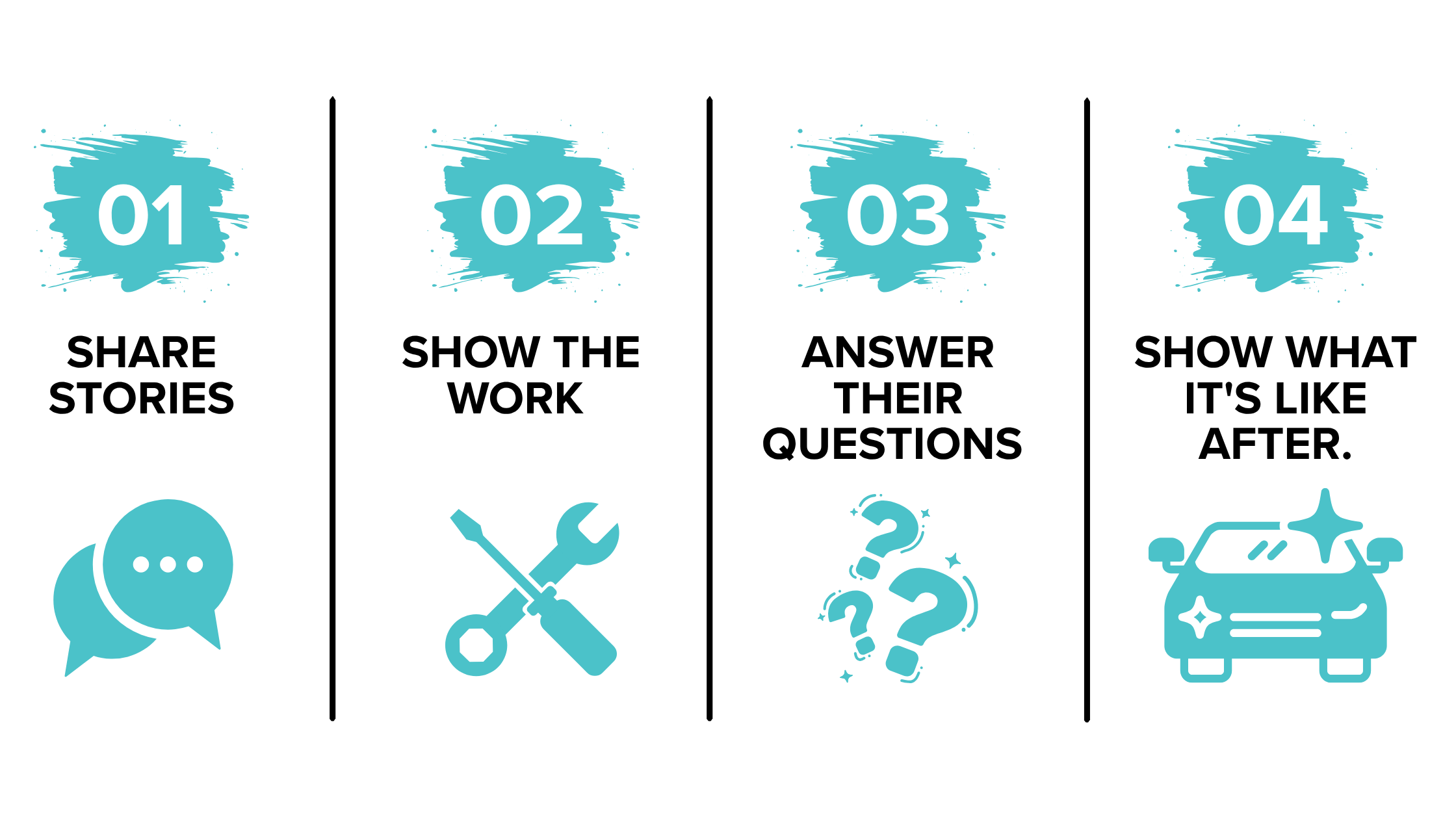
Share stories
The tricky fault you tracked down. The car that came in on a tow and drove out. The kind of job you love doing. Stories show how you think, which a list of services never will.
Show the work
Before and after photos. The finished job. A customer's review in their own words. Proof they can see beats a promise they have to take on trust.
Answer the questions they're already asking
How long will it take? Why does it cost that? Does it need doing now, or can it wait? Every question you answer at the counter is a post someone else is searching for.
Show what it's like after
The car back when you said. No surprise on the invoice. A reminder when the next service is due. That's what a customer is really buying, so show it.
Are you talking about features or outcomes?
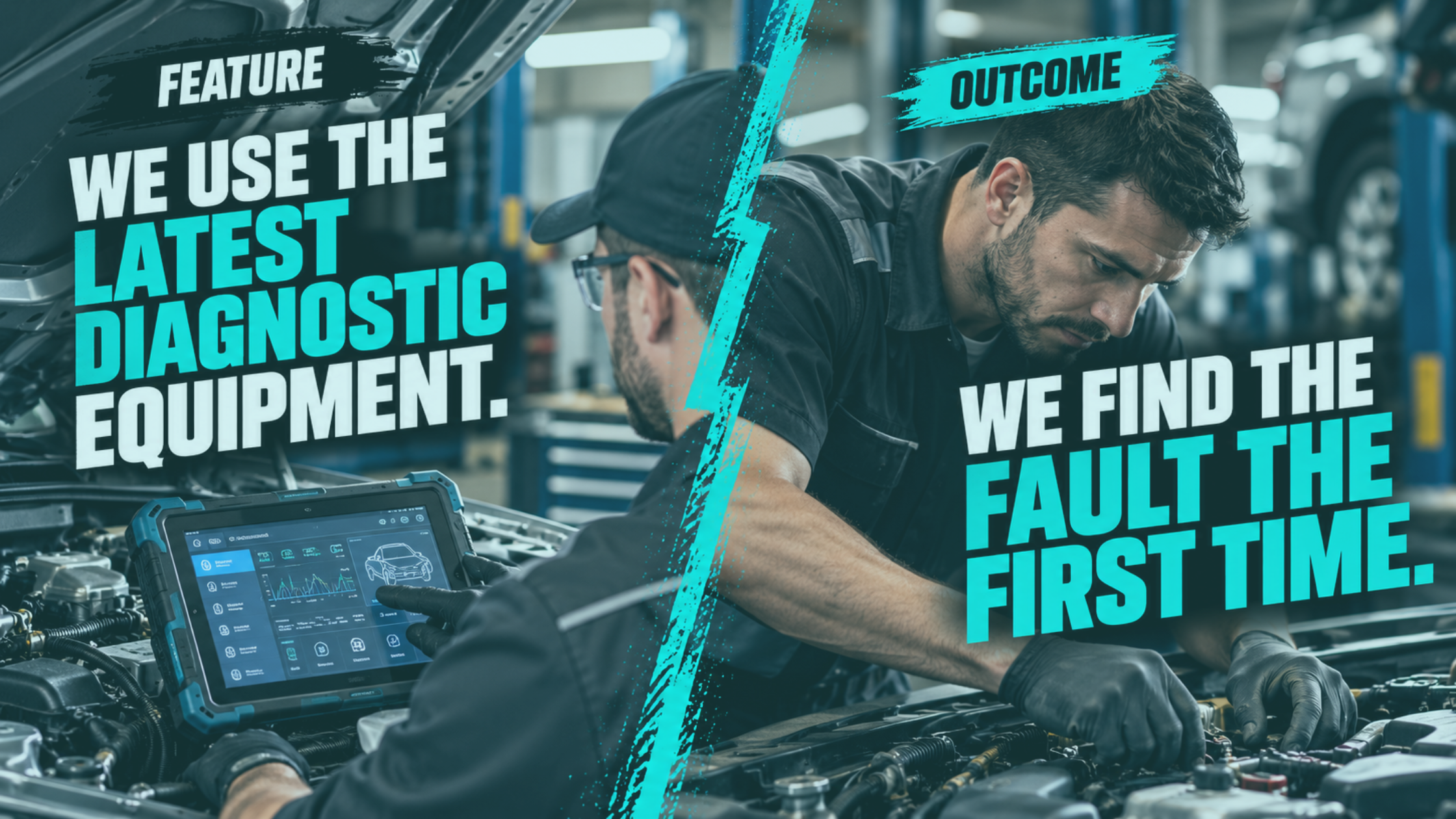
Most workshop marketing talks about the workshop. The equipment, the qualifications, the years in the trade. Those are features.
Customers buy outcomes. Not "We use the latest diagnostic equipment." Instead, "We find the fault the first time, so you're not back in a fortnight."
Same workshop. Same equipment. One is about you. The other is about them.
How do you compete with cheaper workshops?
Not by being cheaper. Don't be cheap. Be better.
When customers can't see the difference between workshops, price is the only thing left to compare. Clear value gives them something else to compare. A customer who understands why your work is worth it doesn't need talking into it. They can see it for themselves.
That starts with being upfront, covered in Why clarity is the foundation of sustainable marketing, and with one clear message said consistently, covered in Should your workshop keep saying the same thing in its marketing?
A quick check for your workshop
Ask yourself:
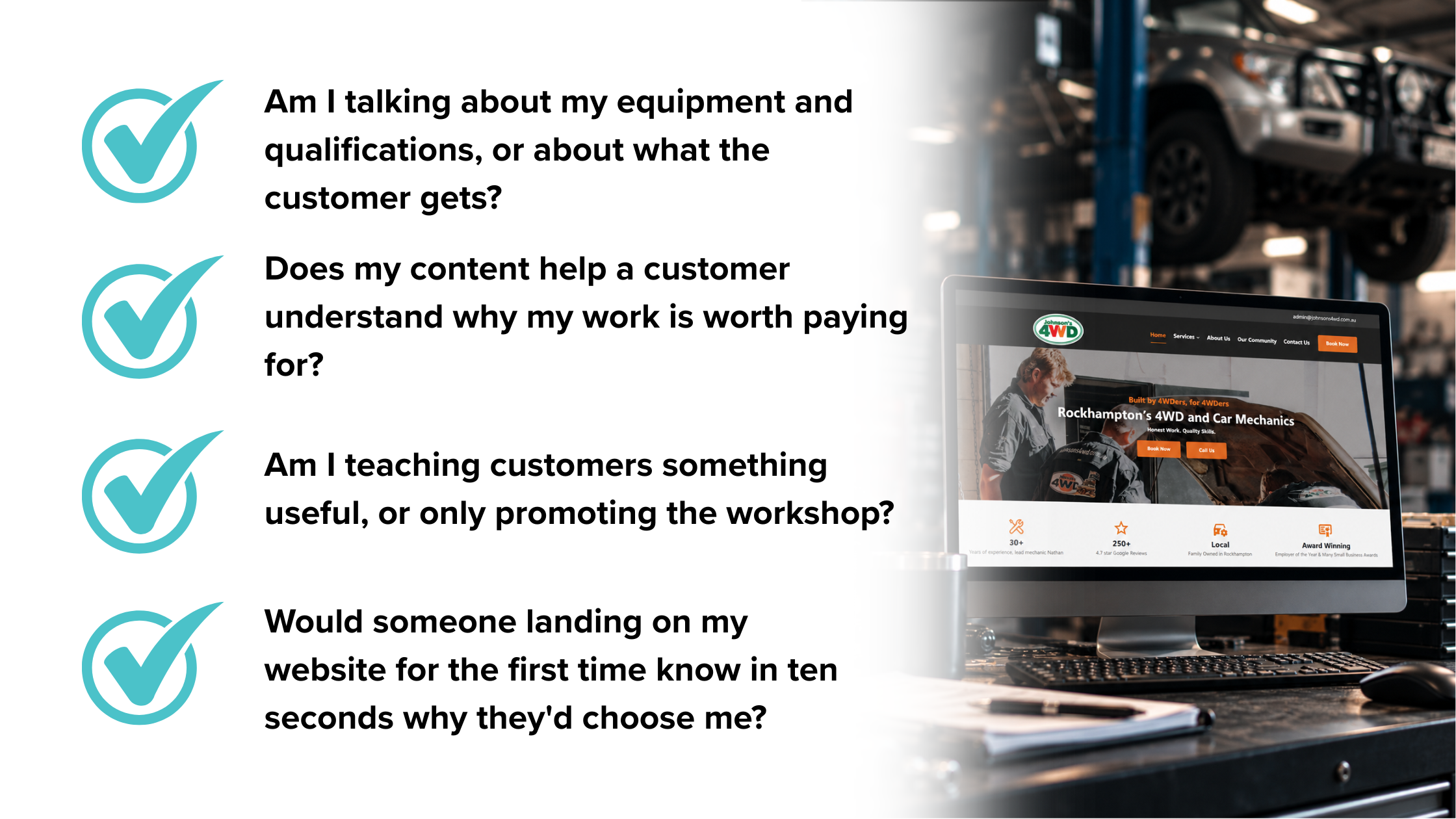
- Am I talking about my equipment and qualifications, or about what the customer gets?
- Does my content help a customer understand why my work is worth paying for?
- Am I teaching customers something useful, or only promoting the workshop?
- Would someone landing on my website for the first time know in ten seconds why they'd choose me?
Read your homepage out loud as if you'd never heard of the place. If it could be any workshop's homepage, it's not clear enough yet.
Is your marketing busy, or clear?
The same goes for your marketing as a whole. Most workshops don't need more of it. They need it clearer and connected.
A post here, an ad there, a flyer when it's quiet. Lots of activity, none of it saying the same thing, none of it adding up. That's loud. It isn't clear.
Marketing Unagency Co. builds marketing for workshops the other way round: one clear message about why your workshop is worth it, carried across your website, social, email and ads, on a rhythm. Less noise. More of the right customers.
If you'd like to see what that looks like for your workshop, the conversation is there when you're ready.
You don't need to be louder to be noticed. You need to be clearer.
Frequently asked questions
How can a mechanic compete with cheaper workshops?
Not by dropping prices. Make the value of your work easy to see: explain what's included, show the finished work, share what customers say, and answer their questions before they ask. When customers can see the difference between workshops, price stops being the only thing they compare, and the right ones choose you.
What's the difference between features and outcomes for a workshop?
Features describe the workshop: equipment, qualifications, years in the trade. Outcomes describe what the customer gets: the fault found first time, the car back when promised, no surprise on the invoice. Customers buy outcomes. Lead with what changes for them, and use features as the reason they can believe it.
What should a mechanical workshop post on social media?
Start with the questions customers ask at the counter: how long, why it costs that, whether it can wait. Add job photos, before and afters, customers' own words from reviews, and the occasional offer. Every post should help a customer understand why your workshop is worth choosing, not just remind them it exists.
Should a workshop advertise that it's the best?
It's better not to. "Best" is a claim customers have heard from every workshop and can't check. Show them you're the right fit instead: the work you specialise in, how you explain things, and how you keep them informed. Customers can judge those for themselves, which makes them far more convincing.